Bindu 21

Article from Bindu no 5

Editorial

Thoroughness and spiritual strength

"How", people frequently ask, " can you continue, year after year, to be so inspired in your teaching?" "Perhaps because we use the methods we teach, and more", one may answer. The energy and the training of the awareness we gain from our Sadhana, provides us with a new experience everytime we sit down to teach – in that way teaching never becomes an empty or formal routine. Our experience as full-time teachers, our common meditations and the constant education at our school, gives us thoroughness combined with spiritual strength.

If you do not want to risk diluting the yoga to a series of insignificant exercises with no real effect – and if you want to continue this kind of work, then we maintain that, as a yoga and meditation teacher, you need more than just a short theoretical education. Not until a person has gone through a comprehensive individual training for several years, can one be certain that as a teacher he or she will possess a solid knowledge of oneself and of the effects of yoga and meditation so that one can be instrumental in bringing about a personal development of consciousness in other people.

A retrospective

The Scandinavian Yoga and Meditation School was founded in Copenhagen in 1970, by Swami Janakananda . He had just returned from a prolonged stay with Swami Satyananda in Bihar, India, where he had learnt the deep reaching Tantric meditations, such as Kriya Yoga , Antar Mauna, Yoga Nidra, Ajapa Japa, Prana Vidya, Chid Akash and others. A yoga which, at that time, could not be learnt in Denmark, or in Europe for that matter.

In the years to follow, the school developed quickly. From one small yoga room in an apartment, to a villa, and when that also became too small, to a larger building in the center of Copenhagen in 1975. Through the years the school has grown and today it is an active center for yoga and meditation, with five yoga-rooms on two storeys, a shop and a pyramid shaped flotation tank.

The need arose early on for a place in the country, to have intensive retreats such as the annual 3-Month Course and the 10 and 14 days courses around the year. In 1972 in Håå, south Sweden, about l 50 km north of Copenhagen, the course center was founded. The Håå International Course Center has since been continuously improved and tailored to meet with the conditions that our courses demand to give the best possible conditions to the people that come, not only from Scandinavia, but from all over Europe, USA, Australia, New Zealand, Singapore and South America.

In the following years many schools sprung up around Northern Europe and Germany, and in order to co-ordinate the yoga teacher education and the teachings, the Håå Course Center also became a meeting place for the teachers of these different schools. Several times a year they meet for meditation, seminars and collective planning.

The foundation

The magazine Bindu, the teaching at the school and the yoga teacher education are based on four cornerstones, four ways of testing reality. They should generally be congruent with one another:

  • First of all, one's own experience with yoga and meditation.
  • The instructions of the classical yoga literature, which have been tried and tested for thousands of years.
  • The scientific research on yoga.
  • The living and direct communication between teacher and student.
Yoga and research

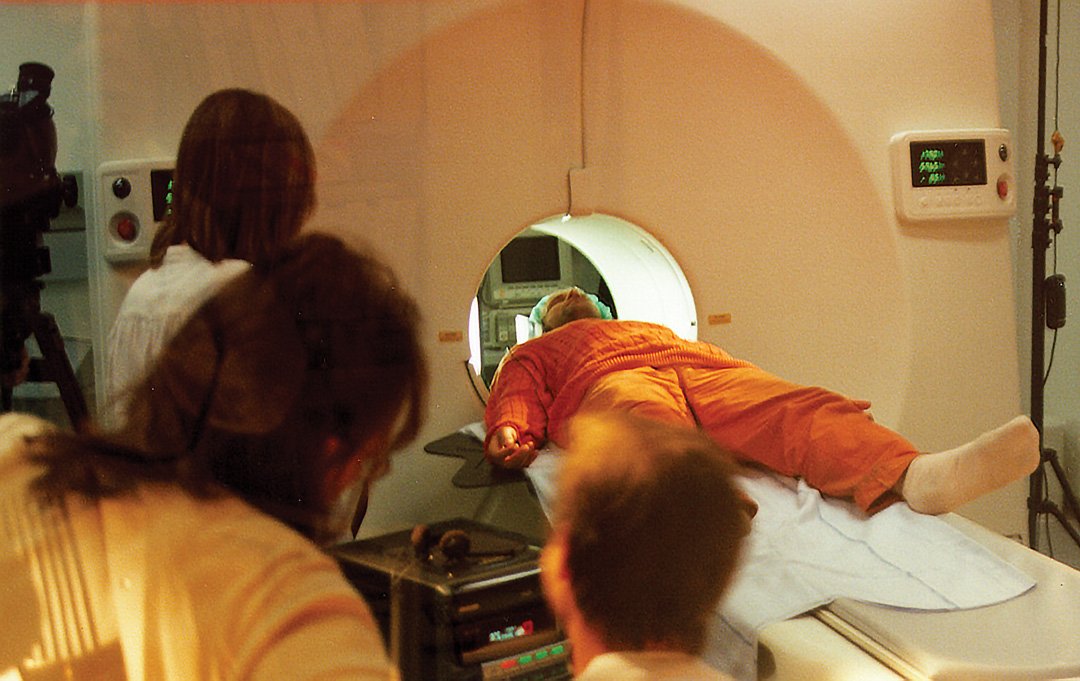
Since 1983, comprehensive research has been carried out at The University Clinic in Cologne, in collaboration with Thomas Schmidt M. D. (see the article T he Source of Energy , in Bindu no. 4). Dr. Thomas Schmidt also led one of the two research teams which, from 1987-92, tested the participants of the 3-Month Course at Håå Course Center . This research was especially directed towards the blood composition of fats, hormones etc. Some of the results have already been presented at medical congresses abroad, and some are not concluded but still under analysis. Dr. Schmidt is presently working at the university of Hannover, investigating the effects of nose cleansing on general health.

In this issue you will find an article Lasting and deep-reaching effects by his Danish colleague, neuropsychologist Erik Hoffmann, who was in charge of the second research team.

The attitude

Today people use yoga for different reasons. Many have discovered that yoga can remedy back problems, allergies, stress or sleeplessness. Others do not have such problems, but do yoga because they have felt how the ability to concentrate improves considerably. However, this does not only concern healing or the ability to function – yoga and especially meditation have something more to offer, and that, too, we wish to communicate via this periodical.

The attitude of Tantric yoga is that human beings are fundamentally healthy. One who comes to a course is healthy. One who comes to a course is regarded as a unique individual with his/her own background and outlook on life – not as some kind of patient, or one who should be persuaded of this or that. And though you can cure or reasons of cure or beauty. The actual perspectives are wider:

To come nearer the essence of life.

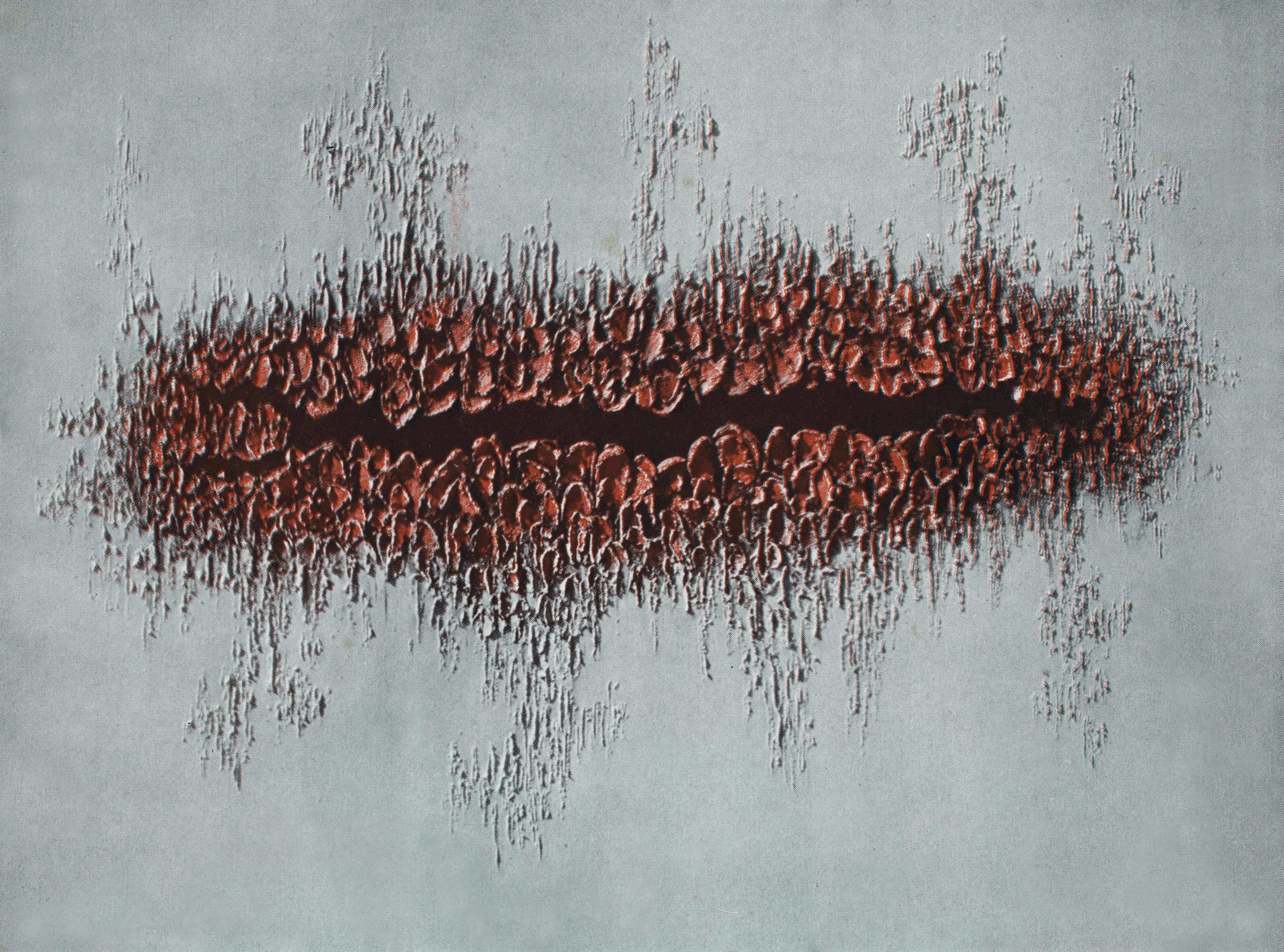
Many of the pictures in this issue are from Mithila, an area in Bihar in India, where particularly the women decorate the walls of the houses. The pictures in this issue of Bindu, however, are not superficial ornaments. They originate in the strong source of folk art, where also, in ancient times, the tantric yantras have their origin. Collectively, this art is called Madhubani after a town in the area. The last picture in the article Kriya Yoga II is called, Shri Vijaya Pujan Yantram (awakening the victorious power); in this editorial you find, Shri Bhaum Pujan Yantram (for fertility, in folk art or spiritual power, in tantra); on the back of the cover, and as the third picture in Kriya II, Shri Ganapateshavari Yantram (Ganesha Yantra). The pictures belong to Swami Janakananda.

Mobile navigation

The Main Menu you can access by clicking on the icon “3 lines”, at the top right of the screen.

The Submenu of each menu item under the main menu will be visible when you click on the icon “3 dots and lines”, at the top left of the screen.